
In-network
UnitedHealthcare Therapists in Rome, NY
In-network with UnitedHealthcare for Rome, by secure video anywhere in New York State.
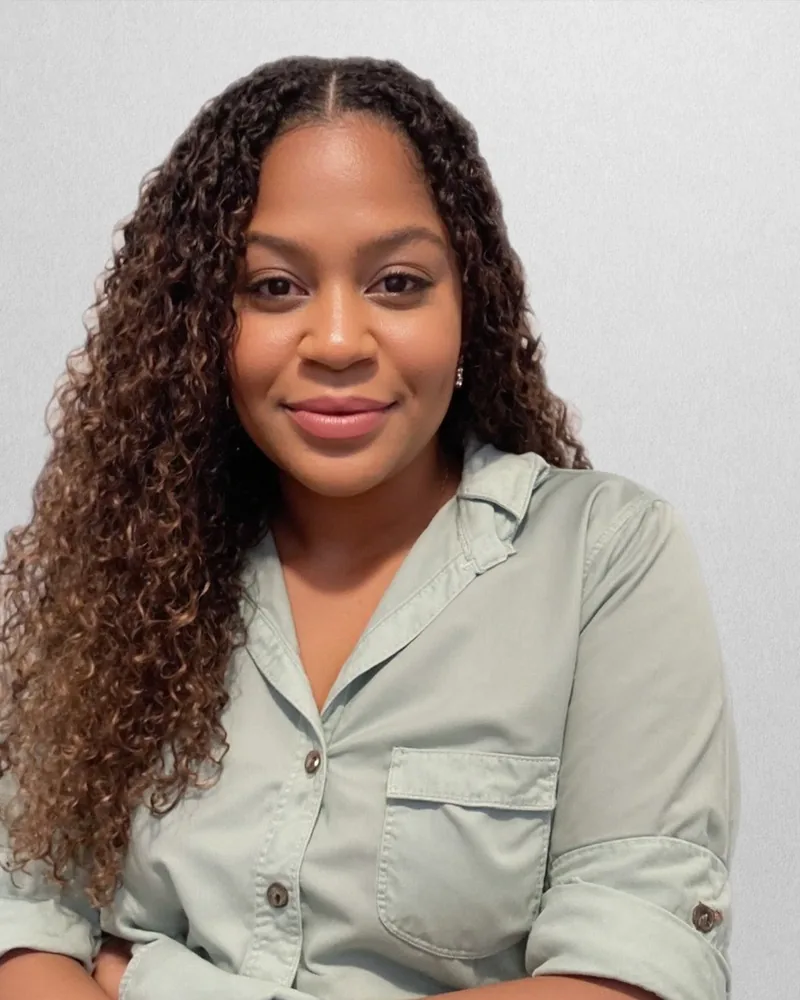
Evelyn Rivas
Psychotherapist

Jordyn Modelevsky
Psychotherapist

Nirja Mistry
Psychotherapist

Seona King
Psychotherapist

Mira Mabed
Psychotherapist

Henry Rubin
Psychotherapist

Melanie Rivera
Psychotherapist

Lianna Hallett
Psychotherapist

Cory Gardner
Psychotherapist

Khadijha Zaman
Psychotherapist

Melodie Badillo
Psychotherapist

Michelle Zak
Psychotherapist
Choose a time and send your request. It takes about 30 seconds and one short form.
In-network in Rome, NY
- UnitedHealthcare
- Aetna
- Medicare
- Oscar Health
- Meritain Health
- Oxford Health Plans
- Cigna
- Optum
- Highmark BCBS WNY
- Univera Healthcare
- MagnaCare
Evelyn Rivas
Psychotherapist
Jordyn Modelevsky
Psychotherapist
Nirja Mistry
Psychotherapist
Seona King
Psychotherapist
Mira Mabed
Psychotherapist
Henry Rubin
Psychotherapist
Melanie Rivera
Psychotherapist
Lianna Hallett
Psychotherapist
Cory Gardner
Psychotherapist
Khadijha Zaman
Psychotherapist
Melodie Badillo
Psychotherapist
Michelle Zak
Psychotherapist
Plan
UnitedHealthcare, accepted throughout New York
Sessions are conducted by telehealth.
How sessions happen
By secure video, anywhere in New York State
Availability
Now accepting new clients. Sessions are conducted by telehealth. We respond within one business day.
Industry-leading, structured care
Progress measured monthly, not guessed at
We respond within one business day
Every clinician state-licensed
Why MindView
Most therapy in Rome has no structure. Ours has four stages and a scoreboard.
Plenty of practices take UnitedHealthcare. What you get here is one format for every client: a full intake, a written treatment plan, and standardized measures reviewed with you every month, so you can see whether it is working.
- 01
Intake
What is actually going on, rated 0 to 10 as your baseline.
- 02
Your history
Why it is happening. History, relationships, work, health.
- 03
Treatment plan
Written and collaborative, built against those causes.
- 04
Monthly review
Standardized measures, reviewed with you. You see the trend.
A license is where our training starts, not where it ends.
Every clinician is state-licensed before they see a single client. Then they train with us across every modality, and how to match one to the problem in front of them.
What clients say
4.96 average from 143 reviews
- 5 out of 5 stars
MindView Therapy has great customer service and is very flexible, with good therapist availability and clear communication of any changes. Genuinely a great place for therapy with zero judgement.
Kailani M.
Verified review
- 5 out of 5 stars
The support staff was very helpful in assisting me to find the right provider. And the provider they found me is personable, a good listener, has good advice, and appears to be quite knowledgeable. I'm very happy with my decision to go with MindView.
Kevin R.
Verified review
- 5 out of 5 stars
I truly felt seen, heard and understood by my therapist. Goals and next step expectations were clearly explained for processing.
Diane S.
Verified review
- 5 out of 5 stars
I had a great onboarding experience with MindView. My therapist took the time to do a really thorough intake, which I appreciated, and the staff keeps communication clear and consistent. Plus, they handled my insurance verification hassle free.
Jennifer P.
Verified review
- 5 out of 5 stars
I'm new to this therapy place, however the couples therapist we are seeing is amazing so far. She's a great listener and I can't wait to see how much further we can get with her guidance.
Maritza M.
Verified review
- 5 out of 5 stars
Great therapists, excellent customer service.
Meta
Verified review
- 5 out of 5 stars
My therapist has been incredibly supportive and compassionate. She creates a safe, welcoming space, and I truly feel heard and understood. I'm very grateful for her guidance. Highly recommend.
Laura S.
Verified review
- 5 out of 5 stars
The clinician is helpful. I would recommend this to my friends. I can communicate better with my family members. Thanks for your cooperation.
Sharmin S.
Verified review
- 5 out of 5 stars
The process to find a therapist was very smooth and quick. The intake did take some time, but it was a very thorough process. Overall a great service and very helpful.
Jorge Z.
Verified review
- 5 out of 5 stars
Helpful, and they let you know everything in advance.
Naphtali S.
Verified review
- 5 out of 5 stars
MindView Therapy has been wonderful to work with. The team is kind, responsive, and made the entire process feel easy from the start. I always felt heard and supported, and I really appreciate the compassionate care I've received. Highly recommend.
Angela D.
Verified review
- 5 out of 5 stars
I've had a great experience with MindView. They are easy to communicate with and handle my needs quickly. I've had some great sessions with my therapist and would highly recommend checking them out.
Kylah B.
Verified review
- 5 out of 5 stars
My therapist has done a great job of teaching me how to translate my thoughts into personal feelings, as well as helpful techniques to deal with my anxiety.
Ladale N.
Verified review
- 5 out of 5 stars
I cannot say enough good things about my counselor. From the very start she made me feel heard, respected, and supported without judgement. She is a great listener and challenges me to grow in healthy ways.
Barbara D.
Verified review
- 5 out of 5 stars
She is such a great therapist. She really listens to what you are saying and helps you figure out situations.
Leah D.
Verified review
- 5 out of 5 stars
The process from start to finish is made so easy. You get assigned to someone quickly and can choose from various time slots to work around your schedule. No sitting on a phone waiting, just quick and to the point with every step.
Shannon G.
Verified review
- 5 out of 5 stars
I've had such a positive experience with MindView Therapy. The sessions have given me so much clarity and practical tools to handle life's ups and downs. I feel more equipped and confident moving forward. If you are looking for a supportive and insightful therapy experience, I highly recommend them.
Lucie L.
Verified review
- 5 out of 5 stars
She is an amazing therapist. She understands me and where I am coming from without hesitation. It is a complete judgement-free zone.
Barbie Z.
Verified review
- 5 out of 5 stars
I've had a really wonderful experience at MindView. My therapist is a great listener and always made me feel heard and understood. I've seen meaningful progress. Would recommend.
Manana D.
Verified review
- 5 out of 5 stars
Kind, helpful, and good at what they do! My therapist is truly one-of-a-kind, and has helped me so much.
Nick B.
Verified review
UnitedHealthcare in Rome, in short
MindView Therapy is in-network with UnitedHealthcare and sees Rome clients by secure video anywhere in New York State. We check your plan before your first session and tell you what you will pay, in plain terms, before you book. We are not the VA and do not replace VA care. We have no Rome office, and we are accepting new clients now.
Rome carries a veteran share well above the statewide rate, a legacy of the Air Force base that ran here for half a century. Here is what that means for scheduling therapy, and what UnitedHealthcare covers.
Does MindView take UnitedHealthcare in Rome?
Yes. We are in-network with UnitedHealthcare and see Rome clients by secure video anywhere in New York State. We check your plan before your first session and tell you what you will pay before you book. We are not the VA, we do not replace VA care, and we have no office in Rome.
How many veterans live in Rome?
Close to 8% of Rome’s civilian adults are veterans: 1,998 people, per Census Bureau estimates covering 2020 through 2024. That is a large share for a city this size, and it did not happen by accident. Oneida County as a whole runs lower, at 6.7% of adults, and statewide the figure is lower still: New York’s veteran share of adults is about 3.7%, per the same Census estimates. Rome’s rate runs more than twice the state figure, concentrated in the one city that hosted the installation itself.
For more than fifty years, Griffiss Air Force Base was Rome’s largest employer and its defining institution. What began as the Rome Army Air Depot in 1942, repairing and maintaining aircraft during World War II, was renamed Griffiss Air Force Base in 1948 and grew into a Strategic Air Command bomber base: the 4039th Bombardment Wing activated in 1959, replaced in 1963 by the 416th Bombardment Wing, which flew B-52 bombers and air refueling tankers out of Griffiss for the next three decades. A federal realignment process starting in 1993 ended that flying mission. Decades of service members and their families cycled through the base before then, and a meaningful number of them stayed, retired nearby, or raised children who grew up in a city built around a runway.
That history is why Rome’s veteran population looks the way it does thirty years after the base itself closed. It is not a young, actively deploying population concentrated near a garrison. It is a mix of retirees, working-age veterans who left service and settled here, and the adult children and spouses who make up the rest of a military family long after active duty ends. Some are decades removed from their own service. Others are the second generation of a family that never quite left.
Three eras of service, one small city
Not every veteran connected to Rome served in the same kind of role, or the same decade. The earliest working generation, into and just after World War II, supported the Rome Air Depot’s aircraft repair and maintenance mission, work that ran more like a factory shift than a combat post and relied heavily on local hires alongside military personnel. The Cold War generation that followed served in an Air Force built around long-range bombardment and air refueling capability, according to the Air Force’s own account of the base’s mission, a posture organized around readiness rather than routine overseas deployment. A third, smaller generation served in the research, intelligence and information-science work that grew at Griffiss from the 1950s onward, the mission that ultimately outlasted the runway.
That range matters at intake. A World War II-era veteran’s family and a Cold War veteran’s family are describing different kinds of service, different kinds of risk to have lived with, and different shapes of absence from home, even though both would check the same box on an insurance form. Neither has to be sorted into the right category before a first session can start.
What is still active at Griffiss today?
The flying mission ended, but the federal government kept part of the base rather than walking away entirely: roughly 136 acres were retained for the New York Air National Guard, the Eastern Air Defense Sector, the Defense Finance and Accounting Service, and Rome Laboratory, according to the Air Force’s own community relations record of the closure. That is a small footprint next to what the base once held, but it is not nothing, and one of those retained missions is still a live, current-day military operation rather than a historical footnote.
The Eastern Air Defense Sector, headquartered today at Griffiss Business and Technology Park, is a New York Air National Guard unit that runs a real-time homeland air defense mission for NORAD, watching for unknown or unauthorized aircraft over the eastern United States. It is staffed by Guard members alongside a Canadian Forces detachment based on site, and it answers up through its own military chain of command, First Air Force, rather than to anything at the business park around it. Rome is a small city with an active, ongoing air-defense operation inside its former base, even though the runway that once launched bombers now serves a business park.
Defense Finance and Accounting Service also kept a Rome office within the acreage the Air Force retained, handling Department of Defense accounting work with more than 700 employees on site, a substantial federal employer that has nothing to do with rank or veteran status. Many are civilians, some of them veterans who moved into federal accounting work once their own service ended, working beside colleagues with no service history at all. In 2025, the office’s employees lost union representation after a federal order excluded certain defense-related agencies from collective bargaining, a recent, concrete example of the kind of employment uncertainty that reaches even the civilian side of a defense-dependent local economy.
That distinction matters for what people actually bring to a first session. Someone connected to an active Guard mission is often navigating something with a clear, current shape: a drill schedule, a deployment, a spouse’s irregular hours. Someone connected to Rome’s broader veteran population is more often navigating something with no clear edge to it: a long identity shift after service ended years or decades ago, or a family history that was never fully talked through at the time. Both fit this page, and UnitedHealthcare coverage works the same way for either household.
What military family life still means for a therapy schedule
Even without an active deployment cycle, a military-connected household tends to carry patterns that outlast the service itself. Families who moved for a parent’s or grandparent’s career often ended up in Rome for the same reason the base drew people here in the first place, and multi-generational military service is common in exactly the kind of city Rome became. It is not unusual for a client here to describe a parent, a spouse and an adult child who each served, in three different decades, in three different branches.
Veterans also manage benefits across more than one system, often insurance through a civilian job alongside separate VA eligibility from their own service. That split is confusing by design, and it is common for someone to put off starting therapy because they are not sure which system a session belongs to. It does not have to be VA care to be valid care. A UnitedHealthcare plan through a civilian job works the same way here as it would for anyone else, and using it does not touch a VA claim or a VA rating in any way.
For an adult child or spouse who never served, the calculation is different but the delay is often the same. People in military families frequently put their own needs last out of habit, having spent years organizing life around someone else’s orders, postings or recovery. A civilian insurance plan and a straightforward booking process remove the part of that habit that says getting help has to be complicated to be legitimate.
Rome also carries a smaller, less obvious version of a military family: households connected to the Canadian Forces detachment stationed alongside the Air National Guard at the Eastern Air Defense Sector. A Canadian service member posted to Rome, or a spouse who relocated here for that posting, is managing an international move on top of everything a domestic PCS already involves, often without a nearby community of other Canadian families to compare notes with. New York licensure and a UnitedHealthcare plan work the same way for that household as for anyone else here, but the isolation of being the only family on the block who moved from another country is its own specific weight.
Privacy in a small veteran community
Nearly 8% veteran share means a city small enough that the local veteran community mostly knows itself. Veterans’ service organizations, unit reunions, and shared history around the base overlap in a city Rome’s size in a way they simply do not in a larger metro area.
That is a genuine reason some veterans and family members hesitate to see a local therapist, even when one is available. A small, close-knit community is also a community where a shared waiting room can mean sitting across from someone from the same VFW post, the same church, or the same street. It is a real friction, and it is a common one to hear named directly at intake.
Seeing a therapist by secure video removes that specific problem without requiring anyone to explain why it mattered to them. There is no waiting room, no shared parking lot, and no chance of an appointment overlapping with someone else’s. The same telehealth setup we use for every client in Rome happens to solve a concern that is more common in a military-connected household than in most others.
It also means the person on the other side of the call is not drawn from the same small circle. In a city where a lot of people are one or two connections apart through decades of shared service, seeing a therapist with no tie to that circle at all is, for some clients, the entire reason they are able to talk plainly for the first time.
What people in Rome’s veteran community often bring to a first session
Because Rome’s veteran population skews toward people decades removed from active duty rather than toward a young, actively serving population, what shows up in a first session here looks different from what shows up near an active post. It is less often an acute crisis tied to a recent deployment and more often something that has been sitting quietly for years.
Retirement from a military-adjacent career, whether service itself or decades working in defense research at Griffiss, changes identity in ways that are easy to under-describe as “adjusting to being retired.” Losing the structure, the built-in community, and the sense of a clear mission at once is a bigger loss than that phrase suggests, and it deserves more than a passing mention at a family dinner.
Grief shows up differently in this population too. Losing a fellow veteran, a spouse of many decades, or a parent who defined a family’s connection to service is common in a population this age, and it often arrives layered on top of an identity that was already partly built around service. None of that requires combat exposure to be real, and none of it requires a tidy diagnosis to bring to a first appointment.
For adult children and spouses, the pattern is often about proximity rather than direct service. Someone who grew up watching a parent work at a base, or later at the research park it became, absorbs a version of that identity secondhand, including the parts that were never fully explained. It is common for a client to say some version of “I don’t know if this counts” before describing exactly the kind of long-running family pattern that counts.
A newer pattern shows up too, among people who never served but work inside what is left of the base’s federal footprint today. A civilian employee at the Guard unit or the accounting office on the old base grounds carries a version of the same background uncertainty a veteran’s family describes, tied to policy decisions made in Washington rather than to anything happening locally. Losing a workplace protection overnight, as the accounting office’s staff did in 2025, is the kind of stressor that rarely shows up as the reason someone books a session, but often surfaces once one does.
We are not the VA
We want this stated plainly rather than left to be assumed. MindView Therapy has no affiliation with the Department of Veterans Affairs. We are not a VA provider, and nothing on this page describes VA benefits, VA eligibility, or service-connected disability care.
We see veterans and military family members in Rome using UnitedHealthcare and the other commercial and Medicare plans we accept, for the same range of concerns we treat in anyone: anxiety, depression, grief, trauma, a difficult transition, or strain in a relationship. If what you need is care specifically for a service-connected condition, that belongs with a program built for it, and we will say so plainly at intake rather than after you have already booked and paid for a session that did not fit.
Using a UnitedHealthcare plan for general outpatient therapy does not touch VA eligibility, a VA disability rating, or any VA claim. The two systems run separately. Someone can be actively working with the VA on a service-connected matter and see us, at the same time, for something unrelated, such as a marriage under strain or a parent’s declining health. Neither system needs to know about the other for either to work.
Booking without going through a VA scheduling process
Part of what keeps some veterans from starting non-VA therapy is simply not knowing the process is different. There is no referral to request, no wait for an assigned provider, and no separate system to learn. Booking through UnitedHealthcare works the same way here as it does for a civilian client with no service history at all.
That distinction is worth stating directly because it removes a specific, common hesitation: the assumption that any mental health care connected to being a veteran has to route through VA scheduling. It does not, when the concern is general and the plan is a civilian one. You choose a therapist, request a time, and start, the same process anyone else on this page goes through, with no extra paperwork attached because of your service history.
What you pay with UnitedHealthcare
We are in-network with UnitedHealthcare, which means you owe your plan’s copay, coinsurance or remaining deductible for each session, not the full rate. We verify your specific benefit before your first appointment and tell you that number in plain terms, so nothing about the cost is a surprise once you have started.
Moving back to Rome to be near an aging veteran parent
Because so much of Rome’s veteran population is now older and settled rather than actively serving, one common pattern here is an adult child moving back, or moving closer, to help care for an aging veteran parent. That is a different kind of relocation from a military PCS move, but it carries its own version of the same licensing rule.
Your therapist has to be licensed in the state you are physically in during a session, and you have to be in New York for it. If you have been seeing a therapist in another state and you are relocating to Rome for caregiving, that relationship does not automatically continue once you are here. This is where you would start again, with someone licensed in New York.
Caregiving for an aging parent is its own source of strain, separate from anything tied to that parent’s service, and it is common for the two to get tangled together in conversation. A parent’s health decline can reopen questions about their service that were never discussed directly, at the same time it is demanding practical caregiving hours from an adult child juggling a job, a move, and a household that used to be someone else’s to manage.
Who we work with in Rome
Adults 18 and older across western Oneida County: downtown Rome, the Fort Stanwix area, the Griffiss park area, and out to Lee, Western, Floyd, Verona, Oneida and Whitesboro. We have no office here. Every session is by secure video, from a device with a camera and somewhere private enough to talk for an hour.
Sessions run weekly against a plan you help write, checked periodically with standardized measures you see yourself rather than hear summarized secondhand.
How to start
Book through our booking page. About 30 seconds. Have your UnitedHealthcare card handy.
We check your plan, quote your cost, and get you scheduled. Accepting new clients, replies within one business day. Prefer to talk first? Call (646) 493-4007.
What UnitedHealthcare covers here
- •We are in-network with UnitedHealthcare and see Rome clients by secure video anywhere in New York State.
- •We check your plan before your first session and tell you what you will pay in plain terms - copay, coinsurance, or remaining deductible.
- •Your therapist is licensed in New York, and you need to be in New York during each session.
- •We are not the VA, have no VA affiliation, and do not replace VA care or service-connected treatment.
How to book with UnitedHealthcare
- 1
Have your UnitedHealthcare member ID card ready.
- 2
Book through our booking page. About 30 seconds.
- 3
We check your plan and give you the per-session cost before anything is scheduled.
- 4
Your first appointment is the intake, by secure video, from anywhere in New York State.
What does therapy here actually look like?
The first three sessions follow a clear structure, so you always know what is coming next.
- Getting started
Your first session is an intake. Your therapist asks what brought you in and about your history, and you rate the intensity of what you are feeling from 0 to 10. That becomes your baseline. You set a recurring weekly time before you leave.
- Mapping what is behind it
Your therapist walks through your life across stages, looking for the patterns and strengths behind what brought you in. You can decline any question and keep any answer short.
- Writing the plan together
You and your therapist build the plan together. Goals are tied to what you came in for, each with concrete objectives, plus one personal goal that matters to you.
- Ongoing
Weekly sessions work the plan. Once a month you and your therapist review standardized measures together to see whether it is working, and the plan is adjusted from what they show.
Therapy here is measured, not guessed
Once a month you have a measurement-based care review. You complete standardized measures, and your therapist reviews the trend with you. If something is not working, the plan changes. Regular therapy is the work. The review is the navigation system that keeps it pointed at the right target.
Sessions are weekly for the first two months to build a foundation, then frequency is reassessed with you. You set the pace, and you share only what you are comfortable sharing.
Use your UnitedHealthcare benefits and get started.
Choose a time and send your request. It takes about 30 seconds and one short form.
UnitedHealthcare questions
Is MindView part of the VA?
No. We have no affiliation with the Department of Veterans Affairs and we are not a VA provider. We accept UnitedHealthcare and the other commercial and Medicare plans listed on this page. If you need care specifically for a service-connected condition, a VA or Vet Center program is the right place for that, and we will say so plainly if that is what you describe rather than let you book something that will not fit.
I'm a veteran with a UnitedHealthcare plan through my civilian job. Can I use that here instead of the VA?
Yes. Using a civilian insurance plan for general mental health care does not affect your VA eligibility or benefits. We check your UnitedHealthcare plan the same way we would for anyone, and see you for the same range of concerns we treat in any adult client. The two systems run independently of each other.
I'm the spouse or adult child of a veteran, not a veteran myself. Can I still book?
Yes. This page covers UnitedHealthcare coverage for anyone in Rome, veteran or not. Growing up in or around a military family carries its own long-running effects, and that is a legitimate reason to book on its own, separate from anyone else's service. We check your plan and see you the same way we would see anyone.
Does my UnitedHealthcare plan need a referral for a veteran or military-connected concern?
Usually not. Most UnitedHealthcare commercial plans let you go directly to an in-network therapist without a referral from a primary care doctor. We confirm the rule for your specific plan during verification, before you book anything, so there is no surprise at claim time.
My parent served at Griffiss decades ago and I grew up here. Is that relevant to therapy?
It can be. Growing up in a city organized around one institution, and watching that institution close, is the kind of formative background that shapes people well into adulthood, whether or not you served yourself. You do not need a diagnosis or a tidy way of explaining it to bring it up.
Do you treat PTSD or combat-related trauma?
We treat trauma generally in adults, using structured outpatient approaches by secure video. Care aimed specifically at combat-related or service-connected trauma is often better served by a program built for veterans, and we will say so plainly at intake if that describes what you need instead of what we offer. Grief, adjustment after service, and family strain tied to a military history are within what we treat.
Do you have an office in Rome for veterans who would rather not use video?
No. We have no office in Rome or anywhere in Oneida County, and every session runs by secure video for every client, veteran or not. There is no in-person option to weigh. You need a device with a camera and somewhere private to talk for about an hour, nothing more.
UnitedHealthcare in other cities
- UnitedHealthcare in Albany
- UnitedHealthcare in Binghamton
- UnitedHealthcare in the Bronx
- UnitedHealthcare in Brooklyn
- UnitedHealthcare in Buffalo
- UnitedHealthcare in Elmira
- UnitedHealthcare in Manhattan
- UnitedHealthcare in Niagara Falls
- UnitedHealthcare in Poughkeepsie
- UnitedHealthcare in Queens
- UnitedHealthcare in Rochester
- UnitedHealthcare in Schenectady
- UnitedHealthcare in Staten Island
- UnitedHealthcare in Syracuse
- UnitedHealthcare in Troy
- UnitedHealthcare in Utica
- UnitedHealthcare in Watertown
- UnitedHealthcare in Yonkers
- UnitedHealthcare in Amsterdam
- UnitedHealthcare in Auburn
- UnitedHealthcare in Batavia
- UnitedHealthcare in Beacon
- UnitedHealthcare in Brentwood
- UnitedHealthcare in Canandaigua
- UnitedHealthcare in Cohoes
- UnitedHealthcare in Corning
- UnitedHealthcare in Cortland
- UnitedHealthcare in Dunkirk
- UnitedHealthcare in Freeport
- UnitedHealthcare in Fulton
- UnitedHealthcare in Geneva
- UnitedHealthcare in Glen Cove
- UnitedHealthcare in Glens Falls
- UnitedHealthcare in Gloversville
- UnitedHealthcare in Hempstead
- UnitedHealthcare in Hornell
- UnitedHealthcare in Hudson
- UnitedHealthcare in Ithaca
- UnitedHealthcare in Jamestown
- UnitedHealthcare in Johnstown
- UnitedHealthcare in Kingston
- UnitedHealthcare in Lackawanna
- UnitedHealthcare in Levittown
- UnitedHealthcare in Little Falls
- UnitedHealthcare in Lockport
- UnitedHealthcare in Long Beach
- UnitedHealthcare in Mechanicville
- UnitedHealthcare in Middletown
- UnitedHealthcare in Mount Vernon
- UnitedHealthcare in New Rochelle
- UnitedHealthcare in Newburgh
- UnitedHealthcare in North Tonawanda
- UnitedHealthcare in Norwich
- UnitedHealthcare in Ogdensburg
- UnitedHealthcare in Olean
- UnitedHealthcare in Oneida
- UnitedHealthcare in Oneonta
- UnitedHealthcare in Oswego
- UnitedHealthcare in Peekskill
- UnitedHealthcare in Plattsburgh
- UnitedHealthcare in Port Jervis
- UnitedHealthcare in Rensselaer
- UnitedHealthcare in Rye
- UnitedHealthcare in Salamanca
- UnitedHealthcare in Saratoga Springs
- UnitedHealthcare in Sherrill
- UnitedHealthcare in Tonawanda
- UnitedHealthcare in Watervliet
- UnitedHealthcare in White Plains
Take the first step
You do not have to figure this out alone. Booking takes about 30 seconds.