
In-network
UnitedHealthcare Therapists in Poughkeepsie, NY
In-network with UnitedHealthcare in Dutchess County. No local waitlist, because there's no local office to wait for.
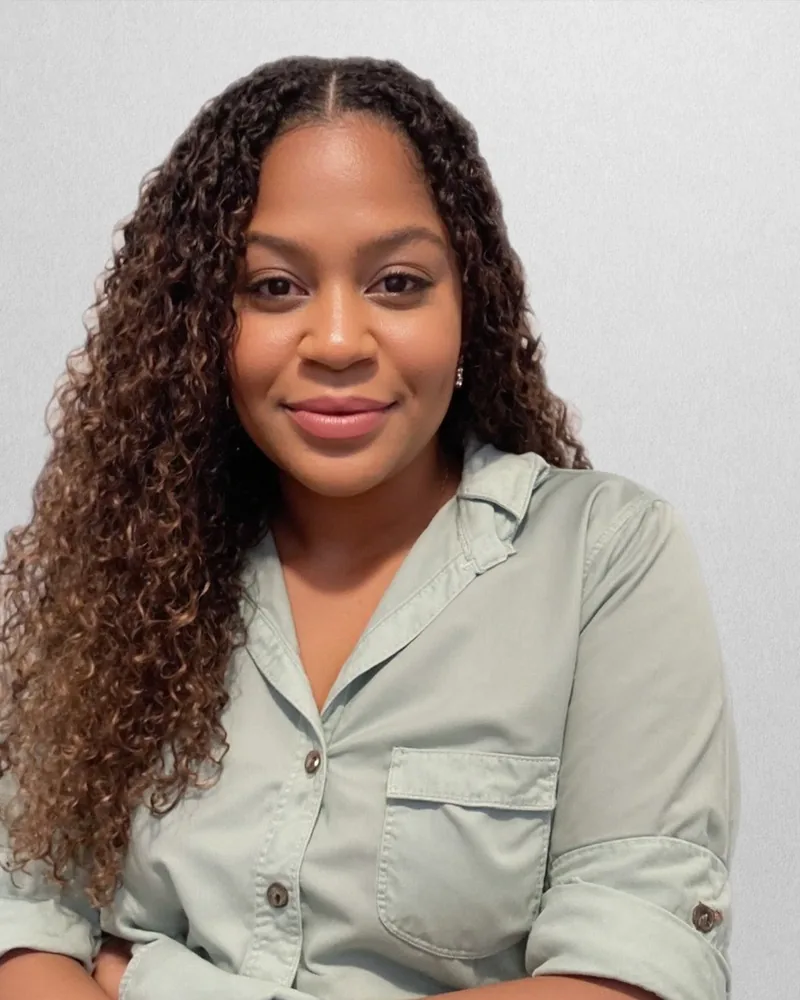
Evelyn Rivas
Psychotherapist

Jordyn Modelevsky
Psychotherapist

Nirja Mistry
Psychotherapist
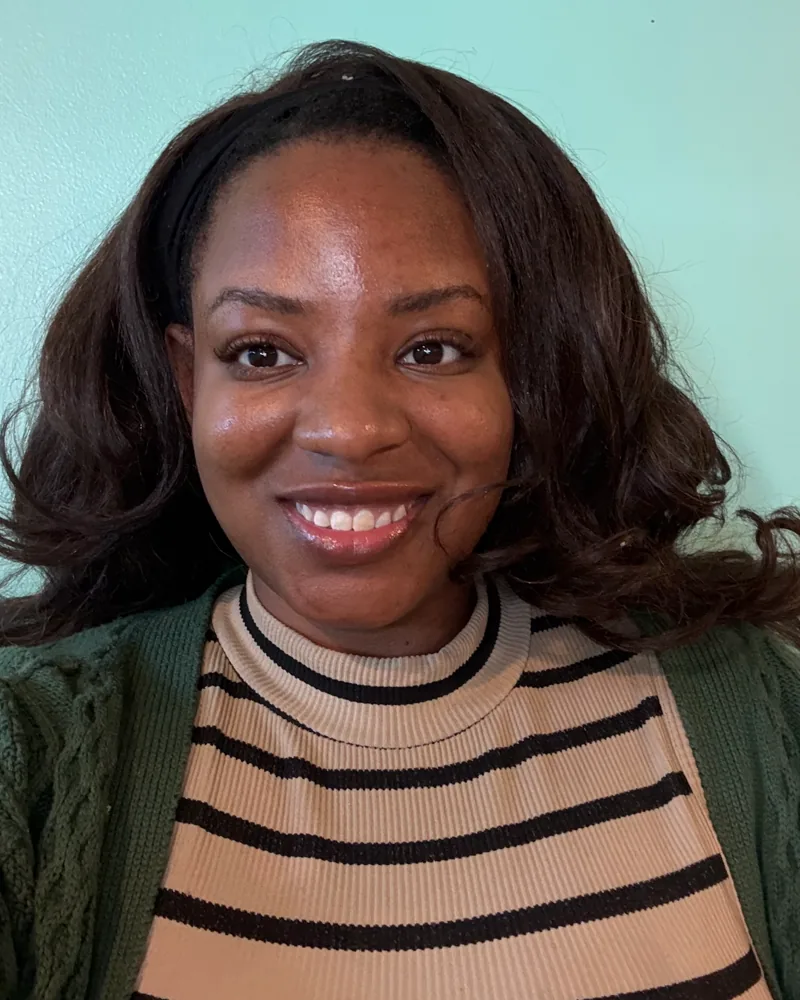
Seona King
Psychotherapist

Mira Mabed
Psychotherapist

Henry Rubin
Psychotherapist

Melanie Rivera
Psychotherapist

Lianna Hallett
Psychotherapist

Cory Gardner
Psychotherapist

Khadijha Zaman
Psychotherapist
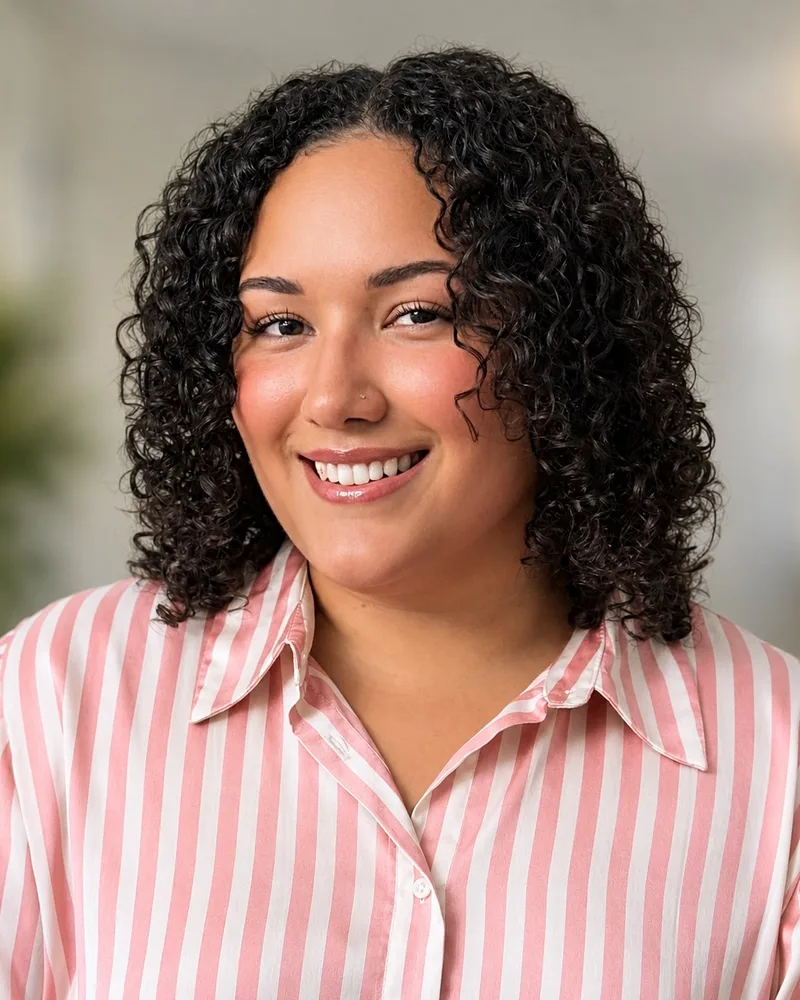
Melodie Badillo
Psychotherapist

Michelle Zak
Psychotherapist
Choose a time and send your request. It takes about 30 seconds and one short form.
In-network in Poughkeepsie, NY
- UnitedHealthcare
- Aetna
- Medicare
- Oscar Health
- Meritain Health
- Oxford Health Plans
- Cigna
- Optum
- Highmark BCBS WNY
- Univera Healthcare
- MagnaCare
Evelyn Rivas
Psychotherapist
Jordyn Modelevsky
Psychotherapist
Nirja Mistry
Psychotherapist
Seona King
Psychotherapist
Mira Mabed
Psychotherapist
Henry Rubin
Psychotherapist
Melanie Rivera
Psychotherapist
Lianna Hallett
Psychotherapist
Cory Gardner
Psychotherapist
Khadijha Zaman
Psychotherapist
Melodie Badillo
Psychotherapist
Michelle Zak
Psychotherapist
Plan
UnitedHealthcare, accepted throughout New York
Sessions are conducted by telehealth.
How sessions happen
By secure video, anywhere in New York State
Availability
Now accepting new clients. Sessions are conducted by telehealth. We respond within one business day.
Industry-leading, structured care
Progress measured monthly, not guessed at
We respond within one business day
Every clinician state-licensed
Why MindView
Most therapy in Poughkeepsie has no structure. Ours has four stages and a scoreboard.
Plenty of practices take UnitedHealthcare. What you get here is one format for every client: a full intake, a written treatment plan, and standardized measures reviewed with you every month, so you can see whether it is working.
- 01
Intake
What is actually going on, rated 0 to 10 as your baseline.
- 02
Your history
Why it is happening. History, relationships, work, health.
- 03
Treatment plan
Written and collaborative, built against those causes.
- 04
Monthly review
Standardized measures, reviewed with you. You see the trend.
A license is where our training starts, not where it ends.
Every clinician is state-licensed before they see a single client. Then they train with us across every modality, and how to match one to the problem in front of them.
What clients say
4.96 average from 143 reviews
- 5 out of 5 stars
MindView Therapy has great customer service and is very flexible, with good therapist availability and clear communication of any changes. Genuinely a great place for therapy with zero judgement.
Kailani M.
Verified review
- 5 out of 5 stars
The support staff was very helpful in assisting me to find the right provider. And the provider they found me is personable, a good listener, has good advice, and appears to be quite knowledgeable. I'm very happy with my decision to go with MindView.
Kevin R.
Verified review
- 5 out of 5 stars
I truly felt seen, heard and understood by my therapist. Goals and next step expectations were clearly explained for processing.
Diane S.
Verified review
- 5 out of 5 stars
I had a great onboarding experience with MindView. My therapist took the time to do a really thorough intake, which I appreciated, and the staff keeps communication clear and consistent. Plus, they handled my insurance verification hassle free.
Jennifer P.
Verified review
- 5 out of 5 stars
I'm new to this therapy place, however the couples therapist we are seeing is amazing so far. She's a great listener and I can't wait to see how much further we can get with her guidance.
Maritza M.
Verified review
- 5 out of 5 stars
Great therapists, excellent customer service.
Meta
Verified review
- 5 out of 5 stars
My therapist has been incredibly supportive and compassionate. She creates a safe, welcoming space, and I truly feel heard and understood. I'm very grateful for her guidance. Highly recommend.
Laura S.
Verified review
- 5 out of 5 stars
The clinician is helpful. I would recommend this to my friends. I can communicate better with my family members. Thanks for your cooperation.
Sharmin S.
Verified review
- 5 out of 5 stars
The process to find a therapist was very smooth and quick. The intake did take some time, but it was a very thorough process. Overall a great service and very helpful.
Jorge Z.
Verified review
- 5 out of 5 stars
Helpful, and they let you know everything in advance.
Naphtali S.
Verified review
- 5 out of 5 stars
MindView Therapy has been wonderful to work with. The team is kind, responsive, and made the entire process feel easy from the start. I always felt heard and supported, and I really appreciate the compassionate care I've received. Highly recommend.
Angela D.
Verified review
- 5 out of 5 stars
I've had a great experience with MindView. They are easy to communicate with and handle my needs quickly. I've had some great sessions with my therapist and would highly recommend checking them out.
Kylah B.
Verified review
- 5 out of 5 stars
My therapist has done a great job of teaching me how to translate my thoughts into personal feelings, as well as helpful techniques to deal with my anxiety.
Ladale N.
Verified review
- 5 out of 5 stars
I cannot say enough good things about my counselor. From the very start she made me feel heard, respected, and supported without judgement. She is a great listener and challenges me to grow in healthy ways.
Barbara D.
Verified review
- 5 out of 5 stars
She is such a great therapist. She really listens to what you are saying and helps you figure out situations.
Leah D.
Verified review
- 5 out of 5 stars
The process from start to finish is made so easy. You get assigned to someone quickly and can choose from various time slots to work around your schedule. No sitting on a phone waiting, just quick and to the point with every step.
Shannon G.
Verified review
- 5 out of 5 stars
I've had such a positive experience with MindView Therapy. The sessions have given me so much clarity and practical tools to handle life's ups and downs. I feel more equipped and confident moving forward. If you are looking for a supportive and insightful therapy experience, I highly recommend them.
Lucie L.
Verified review
- 5 out of 5 stars
She is an amazing therapist. She understands me and where I am coming from without hesitation. It is a complete judgement-free zone.
Barbie Z.
Verified review
- 5 out of 5 stars
I've had a really wonderful experience at MindView. My therapist is a great listener and always made me feel heard and understood. I've seen meaningful progress. Would recommend.
Manana D.
Verified review
- 5 out of 5 stars
Kind, helpful, and good at what they do! My therapist is truly one-of-a-kind, and has helped me so much.
Nick B.
Verified review
UnitedHealthcare in Poughkeepsie, in short
MindView Therapy is in-network with UnitedHealthcare and sees Poughkeepsie clients by secure video anywhere in New York State. Dutchess County has fewer mental health providers per resident than the state average, which is part of why local waits run long. We have no waitlist, verify your benefit before session one, and are accepting new clients now.
Dutchess County isn't a federally designated shortage area, but its own provider numbers sit below the state average. Here's what that actually means for how long it takes to get seen.
Does MindView take UnitedHealthcare in Poughkeepsie?
Yes. MindView Therapy is in-network with UnitedHealthcare and sees Poughkeepsie clients by secure video anywhere in New York State. We verify your benefit and quote your cost before your first session, and there’s no local waitlist to join first.
How many mental health providers does Dutchess County actually have?
Dutchess County has about 1,035 mental health providers on record, a rate of roughly 348 per 100,000 residents, which works out to one provider for every 287 people, according to the 2025 County Health Rankings data set. That data is built from the CMS National Provider Identification file, the same federal registry every licensed provider in the country appears in, for the 2024 data year.
That single number is the clearest, most sourced answer available to a question most people never think to ask before they start calling around: not “does anyone here take my insurance,” but “how many people in this county are trying to see the same limited pool of providers I am.”
New York State overall runs a somewhat better ratio: about one provider for every 265 residents. Dutchess isn’t in a crisis relative to the country as a whole, but it sits measurably behind its own state’s average, and that gap is what shapes how fast a resident can get an opening. It’s a moderate shortfall, not an extreme one, which is exactly why it doesn’t show up as a headline shortage designation while still being real enough to feel from the inside of a phone search.
The same data set names the top-performing counties nationally at closer to one provider for every 220 residents. Dutchess isn’t close to that mark. With roughly 300,000 residents countywide, the difference between a 287:1 ratio and a 220:1 ratio works out to hundreds of additional providers a county Dutchess’s size would need to reach that benchmark. That’s the scale of the gap behind a phone call that doesn’t get answered with an opening.
A separate national tracker, America’s Health Rankings, put the U.S. average at about 363 mental health providers per 100,000 residents as of its September 2025 update, using the same federal NPI registry, which works out to roughly one provider per 276 people. Dutchess County’s 287:1 sits behind that national average too, not only behind New York’s. Two independently built measures, using the same underlying federal data, land in the same place: this county has less provider capacity per resident than the typical American county, not just less than the typical New York county.
It’s also worth being specific about what “provider” means in this count. County Health Rankings defines the category broadly: psychiatrists, psychologists, licensed clinical social workers, counselors and marriage and family therapists all count toward the same ratio. A thinner count in a broad category built this way understates rather than overstates the real gap, since it already includes every discipline that might have an opening.
The county’s population isn’t shrinking either, which keeps steady pressure on that ratio rather than easing it. Dutchess County grew from 295,911 residents at the 2020 Census to an estimated 299,963 by mid-2024, about a 1% increase, reversing a small decline the decade before. A modestly growing population and a below-average provider ratio point the same direction: more people relying on roughly the same base of local providers, not fewer.
How Dutchess compares to the counties next door
The gap is sharper against some of Dutchess’s immediate neighbors. Putnam County runs about one provider per 209 residents. Ulster County runs about one per 237. Both are meaningfully better supplied than Dutchess’s 287:1, using the same federal data source and the same year.
The comparison isn’t universal. Orange County, also nearby, runs thinner than Dutchess at roughly one provider per 355 residents, and Columbia County thinner still at about 403:1. Dutchess sits in the middle of its region: worse off than Putnam and Ulster, better off than Orange and Columbia. For a resident actually calling around for an opening, “middle of the region” still means a market with meaningfully less capacity than the two counties closest to it.
The same 2025 data set also tracks self-reported poor mental health days, a separate measure of how many days a month adults report their mental health wasn’t good. Dutchess averages 5.5 days a month against New York State’s overall 4.9. It’s a modest gap on its own, but it points the same direction as the provider ratio: somewhat more need, somewhat less capacity to meet it, in the same county at the same time.
Why 287:1 is likely an optimistic number, not a pessimistic one
County Health Rankings publishes its own limitations alongside the ratio, and they cut in one direction. The provider count is drawn from the federal registry every licensed provider is required to appear in, and the organization’s own documentation notes that “some mental health providers included in this list may no longer be practicing or accepting new patients, which may result in an overestimate of providers in some communities.”
That’s not a small caveat. A registry that counts anyone who once obtained a provider number, whether or not they’re taking new clients today, whether or not they’re still practicing at all, will always show more capacity than actually exists on the ground. The 287:1 ratio for Dutchess County isn’t the worst-case picture. It’s closer to a best-case one, which means the real experience of calling around for an opening is, if anything, harder than the number alone suggests.
Is Dutchess County a federally designated shortage area?
No, not as a whole county, and it’s worth being precise about that rather than overstating the case. HRSA’s Mental Health Professional Shortage Area program is the federal government’s own tool for identifying counties and sub-areas with a documented provider gap, and it does not currently carry an active geographic designation covering Dutchess County. The single Dutchess-area listing in HRSA’s national data set is a correctional-facility designation that has since been withdrawn, not a county-wide finding.
That absence matters for what it does and doesn’t mean. It means Dutchess hasn’t cleared the specific federal threshold that triggers shortage-area funding and provider incentive programs. It does not mean the county has an ample supply.
A 287:1 ratio, worse than the state average and worse than two of its nearest neighbors, is a real constraint whether or not it clears a particular federal bar. Formal designations are a funding mechanism, not a real-time measure of how long your own phone calls take.
Why the real pool is smaller than 287:1 suggests
The 287:1 figure is a countywide average across every mental health discipline the registry tracks. It says nothing about whether any of those providers has evening availability, works with couples, or is a fit for a specific concern rather than a general one. A person looking for a particular kind of support is drawing from a slice of that number, not the whole of it.
County Health Rankings’ own methodology notes add a second layer to this. Providers can be counted toward a county based on registration details that don’t always match where they actually see clients day to day, and the registry doesn’t verify who is still accepting new patients versus who is fully booked or no longer practicing at all.
None of that is unique to Dutchess. It’s a limitation of the federal data every county-level count is built on. It just means the on-paper ratio, already below average here, is the ceiling on availability, not the floor.
Being in-network and having an opening are two different questions
Most insurance pages answer one question: does a practice take your plan. That question matters, but it isn’t the one that actually determines how fast you get seen. A provider can be fully in-network with UnitedHealthcare and still be booked out for two months, and a search that stops at “in-network” misses the part that decides how long the wait actually is.
Dutchess County’s provider ratio is the reason that second question matters more here than in a better-supplied county. A resident calling around isn’t just checking whether a practice accepts their plan; they’re competing for a limited number of open slots among a below-average number of providers. Both questions have to be answered, and most local searches only surface the first one.
An insurer’s own provider directory tends to make this worse rather than better. Those directories list who is in-network, not who currently has an opening, and a below-average county produces long lists of technically in-network names with no way to tell which ones can actually see someone this month. Calling down that list one name at a time is exactly the process that turns into a multi-week search.
What a thin local supply actually does to a new search
A provider-to-resident ratio doesn’t create a hard wall where care simply isn’t available. It creates something more specific and more frustrating: the providers who do practice locally fill their calendars faster, and a schedule that would have a next-week opening in a better-supplied county runs weeks out in a thinner one instead.
Nationally, the average gap between a referral and a first behavioral health appointment runs about 48 days, close to seven weeks, according to survey data compiled by the National Council for Mental Wellbeing. That figure isn’t specific to Dutchess County. It’s a national benchmark, and a county with a below-average provider ratio has less room than a well-supplied one to beat it.
The practical result shows up as a familiar pattern: three or four calls to local practices, a wait list at each one, and a first available appointment that lands well past when the decision to get help was actually made. None of that reflects anything about how badly someone needs care. It reflects a market with more people than provider capacity to match them quickly.
The same national research shows what a different model of access can do. Clinics built specifically around fast intake report same-day appointments for half their new patients and appointments within ten days for the vast majority, according to the same survey data. The gap between that and a 48-day national average, or a longer wait in a below-average county, isn’t about the severity of anyone’s need. It’s about how the intake process itself is built, and whether it’s capped by a single building’s calendar or not.
Why the moment you decide to reach out matters
Deciding to call a therapist is rarely a calm, planned event. It tends to follow a specific bad week, a conversation that went badly, or a point where managing alone stopped working. The motivation to actually pick up the phone is highest right at that moment and tends to fade the longer nothing happens next.
A six-to-eight-week wait doesn’t erase that motivation, but it asks a person to hold onto it through weeks of ordinary life continuing to happen. Some people manage that. Many quietly stop looking, decide it wasn’t that bad after all, or wait for the next crisis point to try again. A thin local market turns a single phone call into an endurance test that has nothing to do with how ready someone actually is for therapy.
There’s also a second cost that’s easy to miss: the calls themselves. Three or four practices with no opening isn’t just a delay, it’s three or four small rejections stacked on top of whatever prompted the search in the first place. For someone who already found it hard to make the first call, that pattern can read as confirmation that reaching out doesn’t work, when it actually reflects nothing more than a market with more demand than local supply.
None of this is a comment on anyone’s resolve. A person who stops looking after the third full calendar isn’t giving up on therapy; they’re responding rationally to a search that isn’t producing results. The fix isn’t more persistence. It’s a different starting point, one that isn’t drawing from the same limited local pool.
Why video changes the math here specifically
We don’t have a Dutchess County office, and that’s precisely what removes the constraint that produces the long local wait. A practice with a physical location in the county is capped by how many clients that location and its clinicians can absorb. A practice built entirely around secure video isn’t drawing from the same 287:1 pool; it’s matching you with whichever licensed New York clinician on the team has room, regardless of which county they happen to be based near.
That’s a structural difference in how appointments become available, not a claim that video works better than in-person care in general. Research comparing video-delivered therapy with in-person therapy has generally found comparable outcomes for outpatient concerns, and that’s the extent of the claim worth making. What changes here is speed to a first appointment, not the nature of the work once it starts.
Booking works the same way regardless of which county in New York you’re calling from. You choose a therapist from the roster, or let us match you to one, and the appointment goes on the calendar directly rather than into a queue behind however many other Dutchess County residents called the same practice this week.
This is also why a below-average provider ratio in one county doesn’t have to mean a below-average wait for that county’s residents. The constraint that produces a long local wait is a fixed number of local seats against a fixed local population. Remove the local part of that equation and the ratio that drives the wait stops applying in the same way.
What it costs
Your share of a session is your copay, coinsurance, or whatever remains of your deductible for the year, never the full session rate. Most UnitedHealthcare commercial plans allow you to book directly with an in-network behavioral provider without a referral from your primary care doctor; a minority of managed products still require one, and we check yours during verification so a claim doesn’t come back denied over something you had no way of knowing.
We verify your specific plan design and give you your per-session number before your first appointment, rather than publishing a range that might not describe your plan. That referral check happens before you’re scheduled specifically so it doesn’t add its own delay on top of an already long search.
What happens after the first appointment
Everything on this page is about the gap between deciding to get help and actually being seen for the first time. Once that first appointment happens, the calendar problem is solved: you’re scheduling with a specific clinician you already know, not competing for a new opening against everyone else searching Dutchess County that week.
That’s worth separating out because the two problems feel similar but aren’t. Finding an opening in a thin local market is a supply problem. Keeping a standing weekly time with a therapist you’ve already started with is a normal scheduling conversation, no different here than anywhere else on this site.
Who this is for
Adults 18 and older across Dutchess County: downtown Poughkeepsie, Arlington, Hyde Park, Wappingers Falls, Beacon, Fishkill, Pleasant Valley, LaGrange and Red Oaks Mill. Most people here are working through anxiety, depression, trauma, OCD, grief, or relationship strain, often after already discovering how full the local calendars are.
Some arrive here first, before trying anywhere else, having read the numbers on this page and decided not to spend weeks finding out the hard way. Both routes end at the same place: a booked appointment rather than a name on someone else’s list.
Whichever route brought you here, the underlying situation is the same: a county with a real, documented gap between how many people need care and how many local providers there are to see them. That gap is a fact about Dutchess County, not a judgment about anyone’s timing or effort.
There is no Dutchess County office to weigh against this, and no in-person option anywhere on this site. What replaces the local waitlist is a match to an available clinician and a specific first-appointment date, given to you when you book rather than a promise to call you back once something opens up.
How to start
Book through our booking page. About 30 seconds, UnitedHealthcare card in hand, no waitlist first.
We verify your benefit, confirm the referral rule if your plan has one, quote your cost, and give you a specific first-appointment date rather than a callback promise. Accepting new clients, replies within one business day. Prefer to talk it through first? Call (646) 493-4007.
What UnitedHealthcare covers here
- •We're in-network with UnitedHealthcare. Your cost is your copay, coinsurance or unmet deductible, and we quote the exact number before your first session.
- •Most UnitedHealthcare commercial plans allow self-referral to an in-network behavioral provider. A minority of managed products still require a primary care referral, so we check yours during verification.
- •New York parity law requires most commercial plans to cover outpatient therapy on comparable footing with medical care.
- •Sessions must be taken from inside New York State. Our clinicians are licensed in New York only.
- •We have no office in Dutchess County. Every session is by secure video, and there is no local waitlist to join.
How to book with UnitedHealthcare
- 1
Have your UnitedHealthcare card ready. The back usually carries a separate behavioral health phone number, though you don't need to call it to book with us.
- 2
Book through our booking page. About 30 seconds, no waitlist to join first.
- 3
We verify your benefit and give you the per-session cost before anything is scheduled.
- 4
If you've already been waiting on a local provider, tell us at intake so we can move quickly.
What does therapy here actually look like?
The first three sessions follow a clear structure, so you always know what is coming next.
- Getting started
Your first session is an intake. Your therapist asks what brought you in and about your history, and you rate the intensity of what you are feeling from 0 to 10. That becomes your baseline. You set a recurring weekly time before you leave.
- Mapping what is behind it
Your therapist walks through your life across stages, looking for the patterns and strengths behind what brought you in. You can decline any question and keep any answer short.
- Writing the plan together
You and your therapist build the plan together. Goals are tied to what you came in for, each with concrete objectives, plus one personal goal that matters to you.
- Ongoing
Weekly sessions work the plan. Once a month you and your therapist review standardized measures together to see whether it is working, and the plan is adjusted from what they show.
Therapy here is measured, not guessed
Once a month you have a measurement-based care review. You complete standardized measures, and your therapist reviews the trend with you. If something is not working, the plan changes. Regular therapy is the work. The review is the navigation system that keeps it pointed at the right target.
Sessions are weekly for the first two months to build a foundation, then frequency is reassessed with you. You set the pace, and you share only what you are comfortable sharing.
Use your UnitedHealthcare benefits and get started.
Choose a time and send your request. It takes about 30 seconds and one short form.
UnitedHealthcare questions
How long is the wait to see a therapist in Dutchess County right now?
We can't speak for every practice in the county, but the county's own numbers explain why waits run long here. Dutchess has roughly one mental health provider for every 287 residents, worse than New York State's overall ratio of about one per 265. Nationally, the average wait between a referral and a first behavioral health appointment runs about 48 days. A thinner local supply of providers tends to push a county toward that number or past it.
Is Dutchess County officially a federal shortage area for mental health?
Not currently, by the federal government's own listing. HRSA's mental health shortage-area designations don't currently cover Dutchess County as a whole. That absence of a formal designation doesn't mean the county's supply is generous. It's still below the state average, and a county can be a hard place to get seen quickly without meeting the federal bar for a shortage label.
Why does Dutchess have fewer providers per person than nearby counties?
We don't have a single explanation and won't guess at one. What the data shows is the comparison itself. Dutchess sits at roughly 287 residents per provider against about 237 in neighboring Ulster County and 209 in Putnam, both notably better supplied per the same federal data source.
I already called three local practices and none had a next-month opening. Is that normal here?
It's consistent with what the county-level numbers would predict. A below-average ratio of providers to residents doesn't produce a hard wall, it produces exactly what you're describing, openings that fill fast and calendars that stay full for weeks at a stretch.
Does MindView keep a waitlist for Dutchess County clients?
No. We don't have a Dutchess County office to run a local calendar around, so your appointment isn't competing with in-person slots in a single building. You're matched with an available therapist rather than placed on a list to wait for one to open up.
Once I'm matched, how soon is the actual first session?
Same general timeline as anywhere else we see clients, since you're matched to whichever licensed New York clinician has room rather than waiting on one specific local calendar to open up. We'll give you a specific date when you book rather than a range.
Other plans in Poughkeepsie
UnitedHealthcare in other cities
- UnitedHealthcare in Albany
- UnitedHealthcare in Binghamton
- UnitedHealthcare in the Bronx
- UnitedHealthcare in Brooklyn
- UnitedHealthcare in Buffalo
- UnitedHealthcare in Elmira
- UnitedHealthcare in Manhattan
- UnitedHealthcare in Niagara Falls
- UnitedHealthcare in Queens
- UnitedHealthcare in Rochester
- UnitedHealthcare in Rome
- UnitedHealthcare in Schenectady
- UnitedHealthcare in Staten Island
- UnitedHealthcare in Syracuse
- UnitedHealthcare in Troy
- UnitedHealthcare in Utica
- UnitedHealthcare in Watertown
- UnitedHealthcare in Yonkers
- UnitedHealthcare in Amsterdam
- UnitedHealthcare in Auburn
- UnitedHealthcare in Batavia
- UnitedHealthcare in Beacon
- UnitedHealthcare in Brentwood
- UnitedHealthcare in Canandaigua
- UnitedHealthcare in Cohoes
- UnitedHealthcare in Corning
- UnitedHealthcare in Cortland
- UnitedHealthcare in Dunkirk
- UnitedHealthcare in Freeport
- UnitedHealthcare in Fulton
- UnitedHealthcare in Geneva
- UnitedHealthcare in Glen Cove
- UnitedHealthcare in Glens Falls
- UnitedHealthcare in Gloversville
- UnitedHealthcare in Hempstead
- UnitedHealthcare in Hornell
- UnitedHealthcare in Hudson
- UnitedHealthcare in Ithaca
- UnitedHealthcare in Jamestown
- UnitedHealthcare in Johnstown
- UnitedHealthcare in Kingston
- UnitedHealthcare in Lackawanna
- UnitedHealthcare in Levittown
- UnitedHealthcare in Little Falls
- UnitedHealthcare in Lockport
- UnitedHealthcare in Long Beach
- UnitedHealthcare in Mechanicville
- UnitedHealthcare in Middletown
- UnitedHealthcare in Mount Vernon
- UnitedHealthcare in New Rochelle
- UnitedHealthcare in Newburgh
- UnitedHealthcare in North Tonawanda
- UnitedHealthcare in Norwich
- UnitedHealthcare in Ogdensburg
- UnitedHealthcare in Olean
- UnitedHealthcare in Oneida
- UnitedHealthcare in Oneonta
- UnitedHealthcare in Oswego
- UnitedHealthcare in Peekskill
- UnitedHealthcare in Plattsburgh
- UnitedHealthcare in Port Jervis
- UnitedHealthcare in Rensselaer
- UnitedHealthcare in Rye
- UnitedHealthcare in Salamanca
- UnitedHealthcare in Saratoga Springs
- UnitedHealthcare in Sherrill
- UnitedHealthcare in Tonawanda
- UnitedHealthcare in Watervliet
- UnitedHealthcare in White Plains
Take the first step
You do not have to figure this out alone. Booking takes about 30 seconds.